


Establishing the Optimal Matching Model of Computing Power and Electricity: TaiPower Company's Seminar Focused on AIDC Development and Power Matching Strategies
- Date
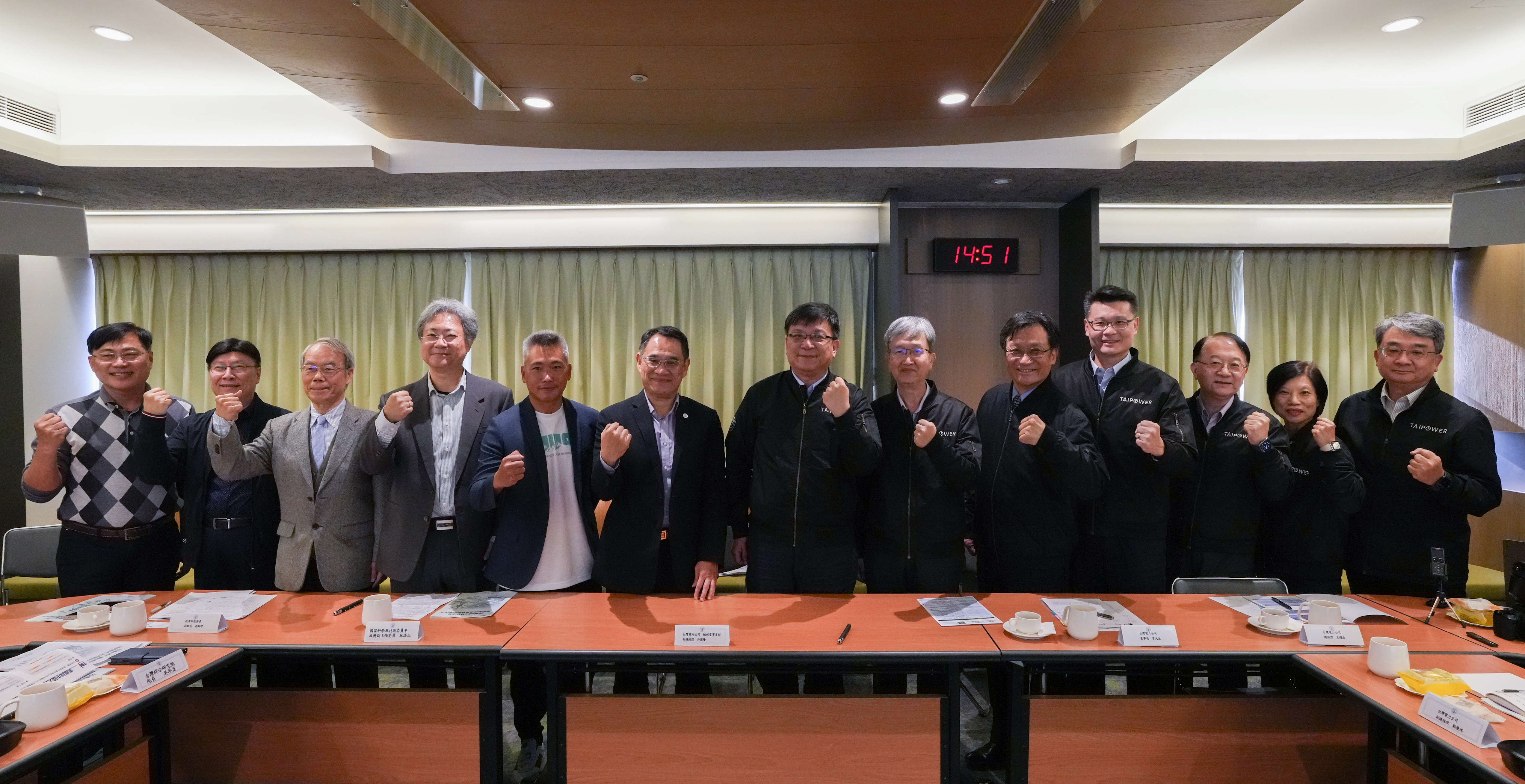
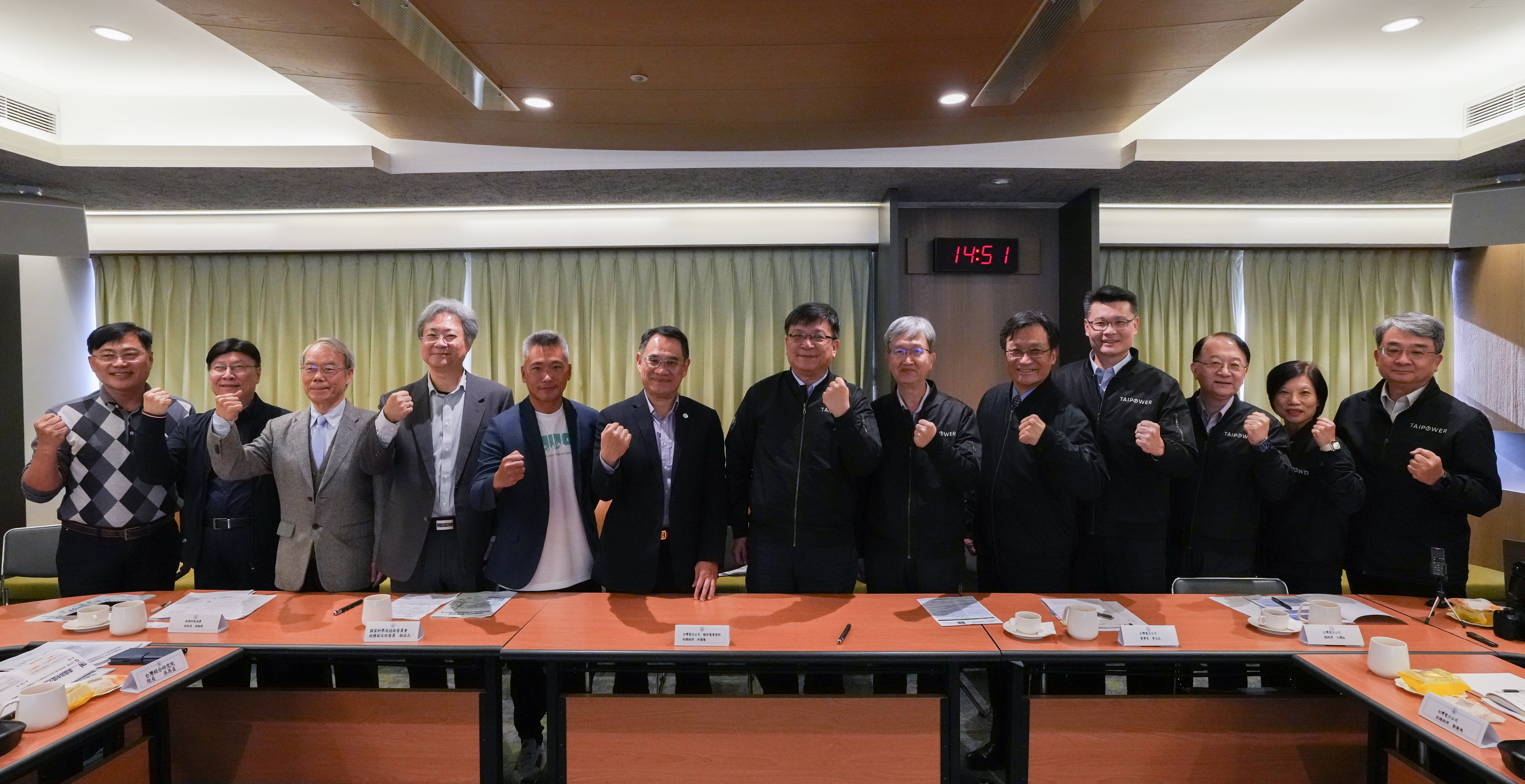
The booming AIDC industry is driving up electricity demand, posing a challenge in many countries. Taipower Company (TPC) held a seminar today (16th, December 2025) entitled "Responding to the Development Trend of AIDC - Challenges and Countermeasures of Grid Resilience". The seminar invited Lin Fa-Cheng, Vice Chairman of the National Science Council, with Taiwan Institute of Comprehensive Research, the Energy Administration of the Ministry of Economic Affairs, and many experts and scholars to have in-depth exchanges, discussing the international trend and domestic situation of electricity consumption growth in the AI industry, and focused on power matching strategies such as co-location of industrial power sources.
During the meeting, Wu Tsai-Yi, President of the Taiwan Research Institute, delivered a speech on "Power Challenges and Energy Transition Strategies under the Global AI Trend," sharing domestic and international trends and demands for energy efficiency management, combined with the development direction of green electricity. The TPC's Research Institute and System Planning Department respectively explained topics such as "International AIDC Development Trends and Supporting Regulatory Measures" and "Taiwan's AIDC Electricity Application Situation and Response Measures." Professors Chang Wen-kung of National Chung Cheng University, Hung Ying-Yi of Chung Yuan Christian University, and Kuo Cheng-Chien of National Taiwan University of Science and Technology exchanged ideas on strategic directions for matching the future AI industry with the power sector through a panel discussion.
The meeting mentioned that AIDC has a unique power consumption pattern, unlike general residential, commercial, and factory types. Its power consumption far exceeds that of traditional factories and is comparable to that of the semiconductor industry. However, compared to large factories, its size is very small, so it can be built in densely populated metropolitan areas, resulting in local power density that exceeds experience and poses a huge challenge to the existing power grid in metropolitan areas. To effectively manage this type of electricity consumption, various countries have successively formulated regulations and supporting measures. The United States and many European countries have considered indicators such as energy efficiency and carbon emissions and have established review standards and regional restrictions for the establishment of data centers. In November 2025, Taiwan amended three subsidiary laws of the Energy Management Act to include the construction (expansion) of data centers with a capacity of 5MW or more within the scope of energy use instruction review.
TPC explained that the load on the northern power grid in Taiwan is growing rapidly while power construction is often delayed due to issues such as differing local opinions. To meet the rapidly increasing demand for electricity, TPC referring to international practices, is guiding energy-intensive industries such as AIDC to prioritize relocation to power-rich areas in central and southern Taiwan. It has temporarily suspended power applications for large data centers with a capacity of 5MW or more north of Taoyuan. This is done by co-locating industries and power sources to guide effective matching of supply and demand, reduce power transmission losses, and lower grid risks.
TPC emphasized that proper allocation of power resources is crucial for AI development. Achieving equilibrium through adjustments between supply and demand minimizes overall costs and maximizes development efficiency. TPC would further introduce the concept of power couples—combining high-energy-consuming industries with diverse power sources—and establish universal standards based on relevant regulations to ensure rational allocation of regional power. This approach would also allow for flexible readjustment should regional grid congestion improve, or new power sources be developed in the future. TPC hopes to synchronize industrial site selection with power infrastructure development, establishing an optimal "computing power and power" combination to support the development of the AI industry.
Spokesperson: Chief Administrator Huang Mei-Lien
Phone: (02) 2366-6271/ 0922-696-383
Email: u030573@taipower.com.tw